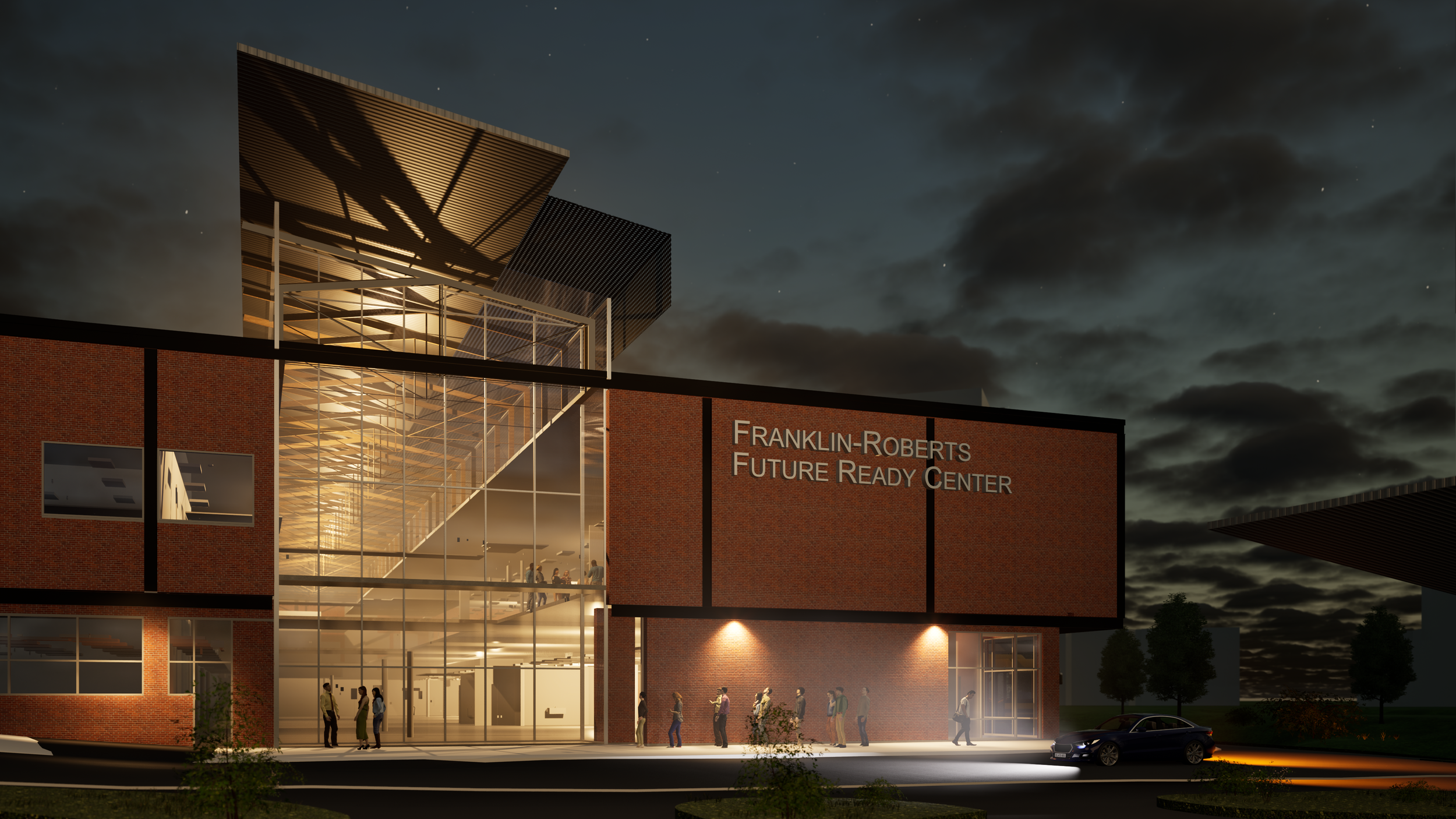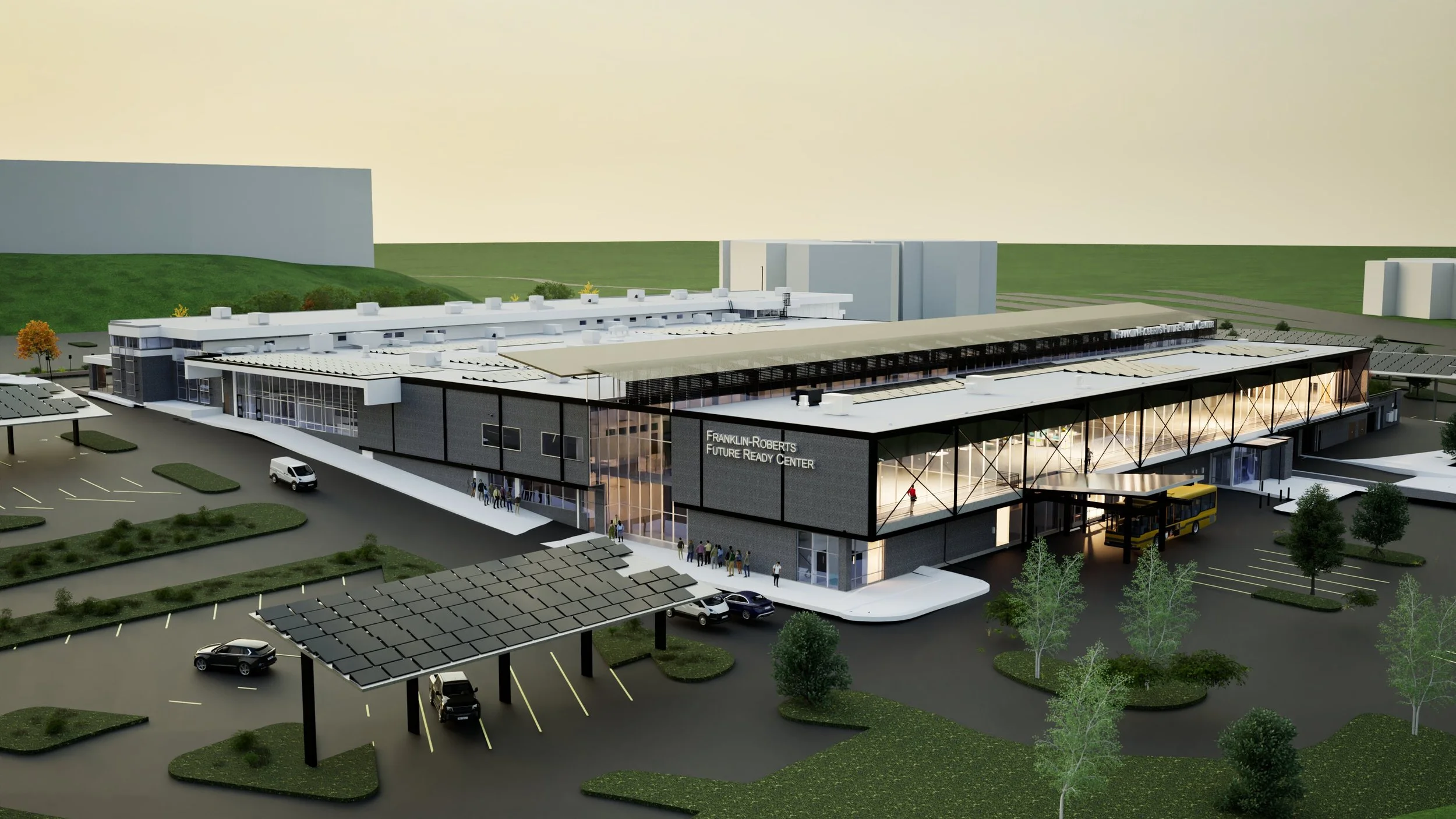
Franklin-Roberts Future Ready Center
Chattanooga, TN
The Franklin-Roberts Future Ready Institute is envisioned as a transformative technical education center that supports Mayor Weston Wamp’s vision of expanding access to career and technical education for underserved and minority high school students in Hamilton County. The institute will provide students with hands-on, skills-based learning environments that prepare them for future education, workforce entry, and entrepreneurial pursuits, empowering them to find their careers by choice, not by chance. Program offerings include Construction, VW STEM, VW Automotive, and an Entrepreneurship Pathway, the latter embedded within the high school curriculum with dedicated classroom, lab, and collaborative spaces where students can build business acumen and develop their own ideas.
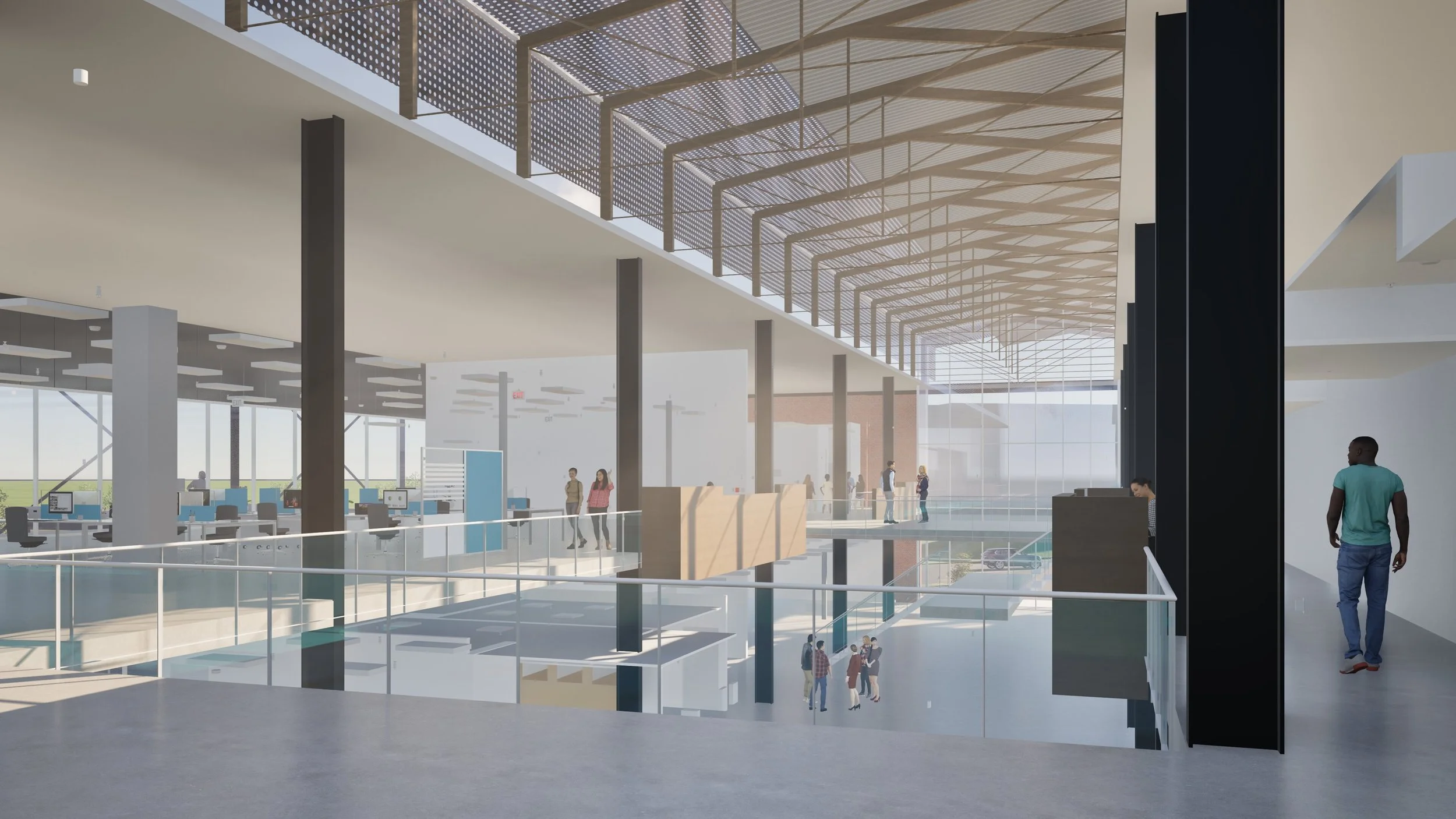
Tinker Ma is providing Phase 0 programming and full design services for the adaptive reuse and renovation of approximately 182,100 square feet across four floors. Early work has focused on understanding how the existing structure can be reimagined to meet Group E (Educational) occupancy requirements while supporting flexible, future-focused learning spaces. Through precedent analysis and close coordination with consultants, we explored strategies for creating connected, collaborative environments that encourage engagement between students, educators, business partners, and the broader community. The project also includes the Business Development Center, a separate, Chamber-led small business incubator located on the upper floors, creating proximity between students and Chattanooga’s entrepreneurial ecosystem while maintaining distinct programmatic functions.
This site has long served as a crossroads in the city of Chattanooga, functioning as a “gateway” between downtown, the historically working-class Westside neighborhood, and the emerging Bend district. Planned improvements offer an opportunity to redefine the site’s legacy. Where highway construction and the surrounding Golden Gateway development once divided these communities, Tinker Ma’s approach seeks to repair those separations by strengthening connections for pedestrians, cyclists, and public transit users. As a key part of the urban fabric, the project prioritizes thoughtful site planning to better serve the Westside community while enhancing accessibility and connectivity. The school itself will create new pathways for students from underserved communities, supporting transitions from high school to vocational and technical training, and onward to entrepreneurship and business leadership, therefore advancing the enduring vision of accessible, high-quality education championed by the school’s namesakes, John Franklin, Sr. and Dalton Roberts.
Innovation and technology are integral to the vision. The programming phase has included exploration of Power over Ethernet as a way to maximize energy savings and connect spaces in the building to an Internet of Things. Digital platforms can streamline use of spaces and optimize user environments, while long-term sustainability strategies aim to reduce energy consumption and leverage city and community resources as educational tools. These systems support adaptable, connected environments that enhance both learning and building performance over time.
Collaboration has been central to the process. Phase 0 engagement included Future Ready Institute leadership and staff, Hamilton County and HCDE administration, facilities and operations teams, students, and Volkswagen as a key industry partner. Additional collaboration included SWITCH Academy leadership and a broad range of stakeholders engaged through site visits and workshops. Insights gathered through site visits and progress meetings directly informed space planning, needs assessments, and early design concepts. Close coordination with the structural engineering team enabled the development of solutions such as a central atrium and cross-bracing strategies that balance technical requirements with architectural vision. This iterative and highly engaged process will continue to evolve as the project advances into future design phases.
While the project is still in its early stages, Phase 0 has successfully delivered a comprehensive program aligned with stakeholder goals and a manageable budget. While long-term success metrics are still to be realized, early stakeholder feedback reflects strong enthusiasm and confidence in the project’s direction. Enthusiasm and optimism from the client team underscore the project’s potential to create lasting impact. The center is positioned to support workforce development and expand opportunity for students and the broader Chattanooga community.
Learn more about Franklin-Roberts and other HCDE future ready centers here.